we had many opportunities to take portraits (and grab shots at the market).
 |
 |
 |
 |
 |
 |
 |
 |
Now Featuring Small-batch, Artisanal Photography!

we had many opportunities to take portraits (and grab shots at the market).
|
|
|
|
|
|
|
|

abby and i are just back from two weeks in ladakh, which is at the northernmost tip of india, bordering both china and pakistan. the ladakh region was under water before the continents fully formed. although it is now a himalayan desert, you can still see the rocks that must have littered the ocean floor.
 |
 |
 |
 |
 |
 |
it was hard to avoid taking photos from the car window.

(as some of you know, i managed a low-income housing repair program before i moved overseas. i no longer work in the field, but when i come across examples of housing policy, i look into them.)
while i was hunting around for photo stories earlier this year, i learned about an urban community called semmanchery, located about 30 km outside of chennai. the government had begun building units in semmanchery in 2004 specifically for households relocated as a result of slum clearance and urban development projects. in 2007, it relocated squatters from their homes on government land on the cooum river bank – which is just 1/4 mile from my house, down a street where i like to take photos – out to semmanchery as part of a now-abandoned river clean-up project. i learned about this situation from the guy who owned the tea stall where i shot a portrait for the “chennai 24/7” art project; and since moving people with limited transportation options 30 km away from whatever jobs they held is not the way to minimize the economic impacts of relocation, i decided to check it out. the tea stall owner agreed to introduce me to his friends who were living there. it turned out that my driver also knew a family living in semmanchery – one that had moved there willingly, by buying a unit from a family that had returned to chennai after being forceably relocated to semmanchery – so there were two households i could interview.
semmanchery is composed of approximately 10,000 units (no one with whom i spoke knew the exact number), clustered into buildings of eight units, with each pair of adjoining units sharing a single toilet. each unit is approximately 125 square feet – essentially, one room large enough only for a double bed and a few chairs, plus a kitchen area for which the tenants must provide their own sink and appliances. every family gets one unit regardless of the number of people in the family.
 |
 |
 |
 |
 |
 |
 |
top row, photos one and two: the housing development is set back far from the main highway. there also is private housing development underway behind the government houses. the access road to the highway was being paved when i visited. photos three and four: the main road through the development. bottom row, first photo: a block of units. second and third photos: a vacant unit, unimproved except for the vinyl tile flooring. i haven’t included any photos or names of the people i interviewed. |
the relocated couple i spoke with, said they are paying 300 rupees (approximately u.s. $6) per month for the unit, over 25 years, after which they will own the unit outright. they had owned their home on the riverbank – to the extent that one can own a house built illegally on government property – and they told me that it had been four times the size of their current unit, which they share with two sons. both the husband and one of the sons had been drivers in chennai, but with the move, they lost most of their clients and have been scrambling to find new ones in the area.
when the government forced the couple to leave their old neighborhood, it provided no compensation or moving assistance, and it’s hard to argue that the family was entitled to any, since they were squatters. this couple’s story may be typical or it may not be; from what i observed, however, the space allocation policy and the accompanying economic dislocation associated with moves to semmanchery seem to be at odds with the government’s positive goals of clearing slums, providing decent housing, and promoting development.
onward: outside dharmapuri, i came across this housing site of approximately 80 units, one built right next to the other, row after row. i was told that the construction began under the previous government, but the current administration stopped the project. the government’s policy now is to provide housing money directly to the rural poor for housing. whether it actually gets used for housing is another question, but in theory the policy is more practical, not unlike the issuance of section 8 vouchers in the u.s., but in a lump sum. in this case, the policy seems for the best, since in this project, there again was no allowance for family size. in fact, the builders didn’t provide a lot of room for much of anything, including indoor plumbing. (not unusual, unfortunately.)
 |
 |
 |
 |
i came across a different, but equally bizarre, situation in yercaud, next to the crowded “pagoda point” tourist attraction, which i mention in an earlier posting. the tamil nadu housing board had built more than 60 houses of a good size and design, with glass-enclosed staircases, as a component of its “small and medium towns project.” despite the structures’ quality, they were empty and vandalized. as i picked my way through the grounds, i met a local resident who told me that the houses were vacant because they had been too expensive for local residents, but according to a web post i read when i googled the project, the project failed because there was insufficient water on the cliff to supply the houses. either way – does no one do feasibility studies anymore?
 |
 |
 |
 |

during the second week, i went to salem, about 65 km south of dharmapuri. it is a significantly larger city and district than dharmapuri (3.5 million people vs. 1.5 million), and there was a different feel to this second group of kids. in part, it may have been that, because they come from a more urbanized area, they have different perspectives; or perhaps, because they had further to travel each day, they had less time to search for stories. it also may be that “only” six of them had been rescued from child labor, while the other four instead were members of the children’s parliament, the local children’s advocacy organ. (i don’t mean to be glib – six is still six too many – but i think the mix affected the way some of them approached the assignment.) at any rate, we ended up with more daily life scenes than issue scenes, but they still produced some great photos by the end of the week.
it’s also important for me to mention that one of the girls who was rescued from labor was subsequently mainstreamed back into public school, and she now is a star track athlete who is about to represent tamil nadu in a national competition in mumbai. i’m trying to not sound preachy, but … child labor is a crime against the future of the entire country.
now, the photos:
 |
 |
 |
 |
| kannan focused on village life and caught some wonderfully spontaneous shots. | lavanya did a mix of photos. the second photo is of a child laborer. | ||
 |
 |
 |
 |
| nathaji photographed garbage in the village and unsanitary conditions around the water tank – two common scenarios. | pasupathi executed some textbook close-up shots, and also documented issues of food safety in the markets. (note the flies.) | ||
 |
 |
 |
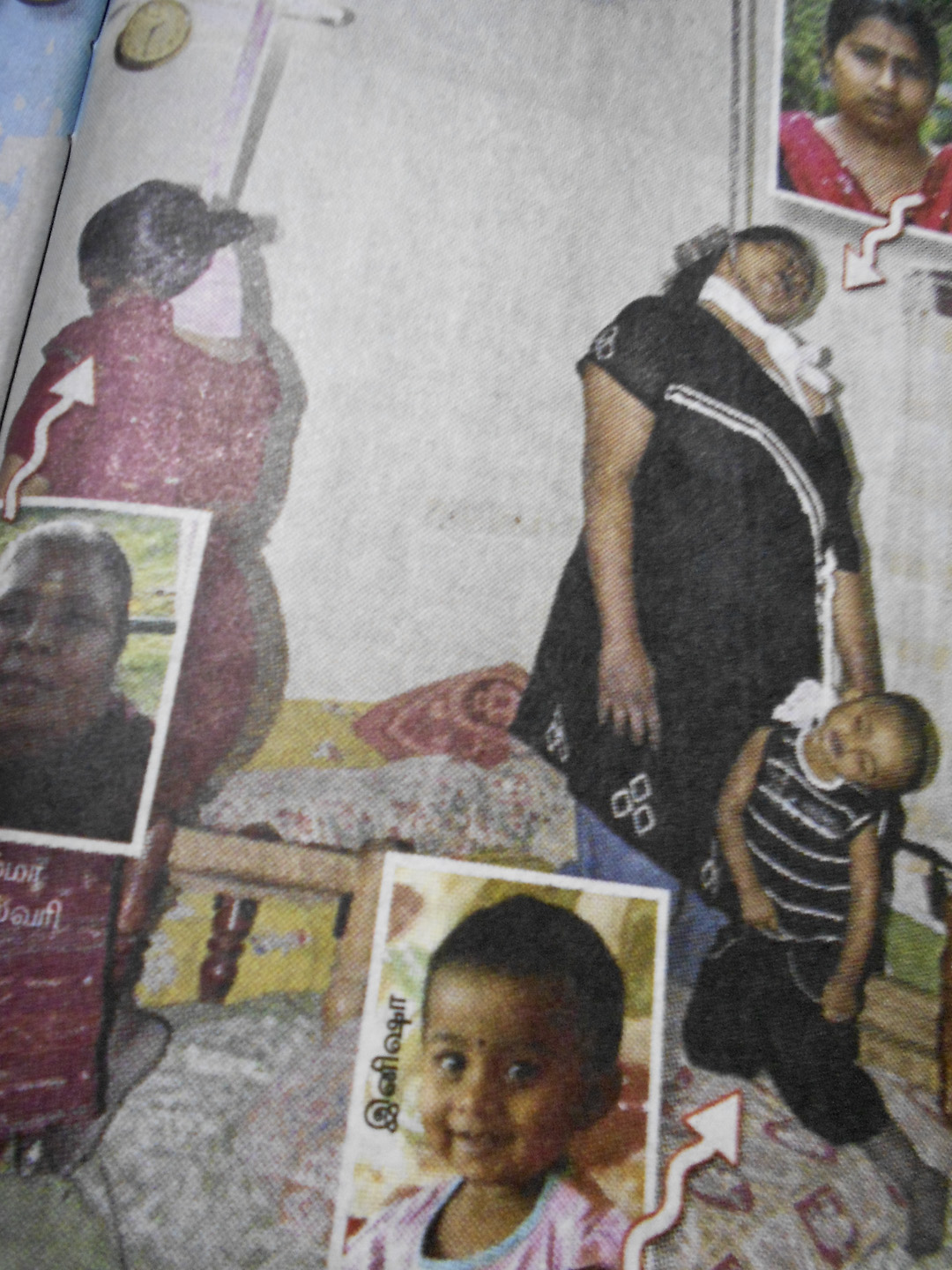 |
| rathidevi documented workers, including these scenes at a brick kiln. | ramya’s work fascinated me because she took a lot of photos of magazine pages and television screens, essentially taking a post-modern approach to photography. but how do you explain jean baudrillard to kids? | ||
 |
 |
 |
 |
| santhosh was drawn toward photographing flowers. the second photo subtly reminded me that trash on the street is a human problem; it doesn’t exist by itself. | shanti took one of the best street photography shots i’ve seen in a while. the second photo shows workers employed under the national rural employment guarantee act. | ||
 |
 |
 |
 |
| tamilselvam also focused on scenes of village life. | tamilselvi was concerned about the men and boys climbing coconut trees without any safety devices. | ||

after the first week of teaching photography, i went to yercaud hill station. (hill station is another term for mountain town.) i started from dharmapuri relatively late, so by the time i got to the base of the mountain, the sun was going down, but that was no worry; without pushing my little Ford Figo too much, it’d be a half hour to the top.
or so i thought.
as i went up around a few crazy curves, i was amazed to see how many motorcycles were coming down with their lights off, the rider (or riders) without helmets. there was still light in the sky, but when you’re whipping around blind corners on a two-wheeler, you’d think you’d want people to see the beam of your headlamp in advance. but in india, many motorcyclists believe that using headlights is bad for the battery, so they keep them switched off. this means that the non-motorcyclist driving on said roads with multiple blind corners have to be extra careful.
after reaching an elevation of 800 meters above sea level or so, and after having gone around a lot of blind corners, the hairpin curves began. it turns out, according to google maps, that the road to yercaud looks like this:

or, to be more precise, like this:
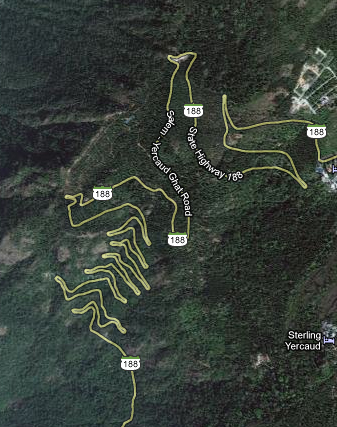
anyway, each turn is helpfully marked with its number: hairpin bend 1/20, hairpin bend 2/20, etc. so up i went, occasionally seeing other vehicles pass me and then catching up to them when they in turn got stuck behind a slow-moving bus. i was part of a convoy, then, when at bend 8/20 i saw the lightning flicker in the distance; and still in the convoy when, at bend 9/20, the wind started rushing through the trees; and still there again at 10/20, when the rain began coming down – gently at first, and then hard – and we started having to swerve to avoid the branches that had fallen into the road. some of the branches were big enough to do serious damage to the car, and there really was no telling when the next one would come down, so the trip was pretty exhilarating. there’s something thrilling about knowing that you going to make it to your destination in one piece, but you don’t know what condition that piece will be in by the time it arrives …
the next day was bright and sunny, so i did some exploring. the interior roads to the various tourist sites are wide enough to accommodate two automobiles passing one another with room to spare for a single playing card slipped in between them – when they weren’t under construction (for widening, granted) – and most drivers are not so good at yielding to oncoming traffic – driving on narrow roads in india is sometimes like playing chicken with the kid who was always caught smoking behind the high school during class. still, i made it where i needed to go.
 |
 |
 |
the first stop was the shevaroyan temple, which was one of the most noted tourist attractions – there was even a photo from the hill on which it sits, from 1907, in my hotel. thus, when i arrived, i was disappointed to see that while, yes, the view from the hill was fine, the temple itself had only been built in 2006, and it looked like someone’s garage. there was an ancient wishing tree outside, but that was about it for visual interest. but as i was leaving, i figured, “i’ve come all this way, i might as well go into this concrete shed and see what everyone’s looking at.” it turns out the shed was just the entry to a tunnel into the hill to where the temple was. the tunnel was a little thing – maybe four feet high and wide, and 15 feet deep – that dead-ended with a stone ledge on which the idols sat in their finery, a priest standing by to bless the worshippers – but it was the last thing i’d expected to find, and i was happy i’d gone in.
 |
 |
| this is close as they would allow me to get with my camera. right: an image of the sri chakra, taken from wikipedia. | |
i then followed a sign pointing the way to “the world’s biggest sri chakra maha meru temple.” with a come-on like that, who could pass up the opportunity? sri chakra is a mandala composed of 43 triangles representing shiva and devi (or shaktri), and thus the unison of the male and female divine. there’s a lot of other stuff going on in it that i haven’t made the time to research yet, but as i stood there, i could hear every jewish comedian who ever lived saying, “and if this is the world’s biggest sri chakra maha meru temple, i’d hate to be inside the world’s smallest one.”
on the way down the hill, i came across a drunk guy lying in the middle of my lane, so i stopped and yelled at him to move, and he rolled himself out of danger, but that pretty much made me decide to finish up for the day. i went to see one last tourist attraction, pagoda point, another scenic overlook. holy crap. the three photos that follow show, first, the parking situation i had to fight through to get in and out of the lot; the pagoda; and the view.
 |
 |
 |
goodbye, yercaud.

during the weeks of may 14 and 21, i am teaching photography skills to village kids in tamil nadu. this project, supported by unicef, gives kids point-and-shoot cameras and asks them to document their lives and the issues that concern them. none of them have ever held a camera before, but they have experienced their issues – child labor, crumbling school buildings, etc. – first-hand.
the first batch of 10 kids were in dharmapuri, about 300 km southwest of chennai. aged about 12-18, all of them had been rescued from child labor situations. they now live with their parents and are enrolled in special schools that help them fill in the gaps in their education. the integrated child protection project, a project of unicef that works in coordination with the indian government’s national child labour project (indian spelling of labor this time), facilitated the workshop, and icpp staff visit the children weekly until they turn 18 to make sure that they stay with their studies and don’t return to work.

of the various socioeconomic and physical infrastructure problems associated with rural poverty, the two that the icpp staff told me are of the greatest concern are child labor and child marriage. many families worry daily about having enough food to eat, so if they need the children to help earn money, they send them to work in the cotton fields or brick kilns, or they find a job in a local business. sometimes, the parents pledge the child’s labor to pay off a loan. it is very hard to prove cases of child labor, since the parents may have a certificate forged to show the child is above the legal age of 15 years, or they tell investigators, “he’s just helping his father in the fields because he wants to, he’s not employed, he’s not being forced to work.”
the plight of child brides is more complicated, and as best as i understand it, the problem has both an economic and a social dimension. as a girl gets older, the amount of dowry that her parents are expected to offer increases. this gives the parents the incentive marry their daughters off as early as possible, even though child marriage is illegal. in addition, many of the parents need to migrate for work, so they think that they are providing for the girls’ security by marrying them off early. ironically, this only puts them at greater risk of becoming victims of domestic violence or suffering complications in childbirth. as for the prospective husbands, while some of them are equally young, the older ones see child brides as more likely to be docile and obedient, which is what they want, since the girl moves into the husband’s family’s home and essentially goes to work for him and his mother. one of the students in the group managed to stop two child marriages by reporting the arrangements to the authorities before they could be completed, and another was almost married off at fourteen herself.
this probably has been the most rewarding experience i’ve had in my five years of living overseas. the kids were eager to shoot but attentive to the instructions and in-field mentoring i gave them, and the improvement they showed over the four days (in composition or at least in confidence) was amazing; i’m not embarrassed to say that i wish i had taken some of the photos these kids took. they didn’t address all the issues we were hoping to capture – for example, none of them took photographs of child brides – but they did capture both the positive things in children’s lives as well as the more serious ones; and when they explained the issues to a district official who came to the final day presentation, their passion was intense. i have a hell of a lot of respect for these youngsters; and while i’m not going to go all sally struthers (kids – ask your parents!) about them, if i now hear anyone – including myself – whine about how tough his life is, i’m going to kick him in the ass.
with a little post-production editing, here are the befores and afters:
| a first day photo | later photos: life scenes and issues/stories | |
 |
 |
 |
| photographer: lakshmi arumugam. the final photo is from a story about a children’s school. the three girls who worked on this story were struck by the teaching aids all over the walls, and lakshmi’s photos showed both how many there are and how the teacher uses them. | ||
 |
 |
 |
| photographer: kokila kaveri. the improvement in composition from the first photo to the second is obvious. the last photo is a close-up of a child using the materials on the schoolroom walls. | ||
 |
 |
 |
| photographer: jayamani jayavel. this photographer also worked on the schoolroom story, but then she did a series on unsafe drinking water and drainage problems in her neighborhood. | ||
 |
 |
 |
| photographer: munirathinam pattabi. munirathinam focused more on life scenes, including scenes of women at work. again, the improvement in composition is clear. | ||
 |
 |
 |
| photographer: shanmugam raja. shanmugam shot at a local religious fair, and then got up early to document food vendors preparing for the morning trade. | ||
 |
 |
 |
| photographer: selvi murugan. selvi made some interesting, quirky photographs from the start. the latter two photographs document the condition of an abandoned school building that the village has failed to demolish even though there is a new school on the same grounds. | ||
 |
 |
 |
| photographer: najma nazeer. najma also showed some talent from the outset. the second photo shows a woman working in a silk-spinning workshop. the third photo shows a girl squatting in the toilet facility of her house, which is located next to the railroad tracks. | ||
 |
 |
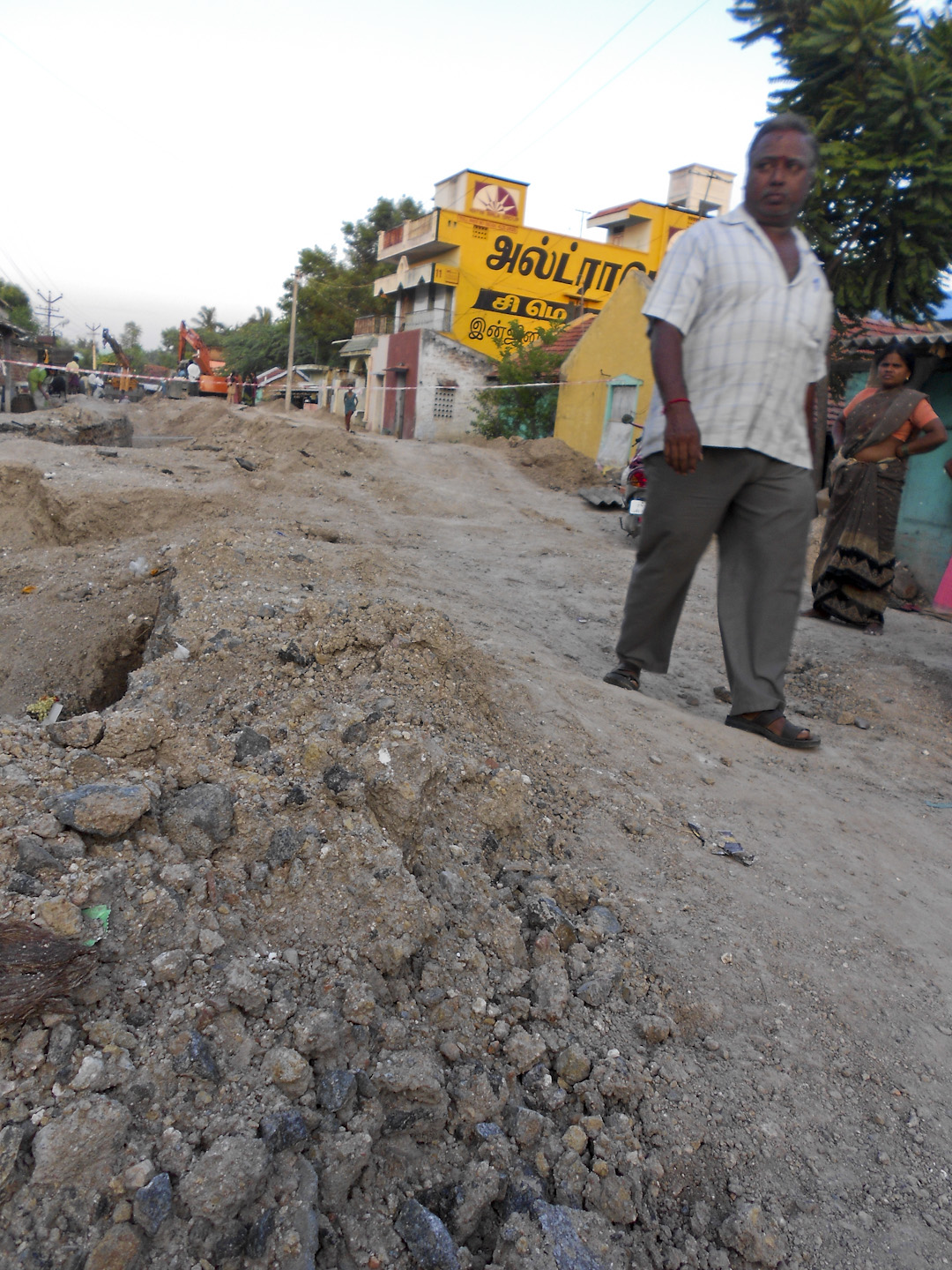 |
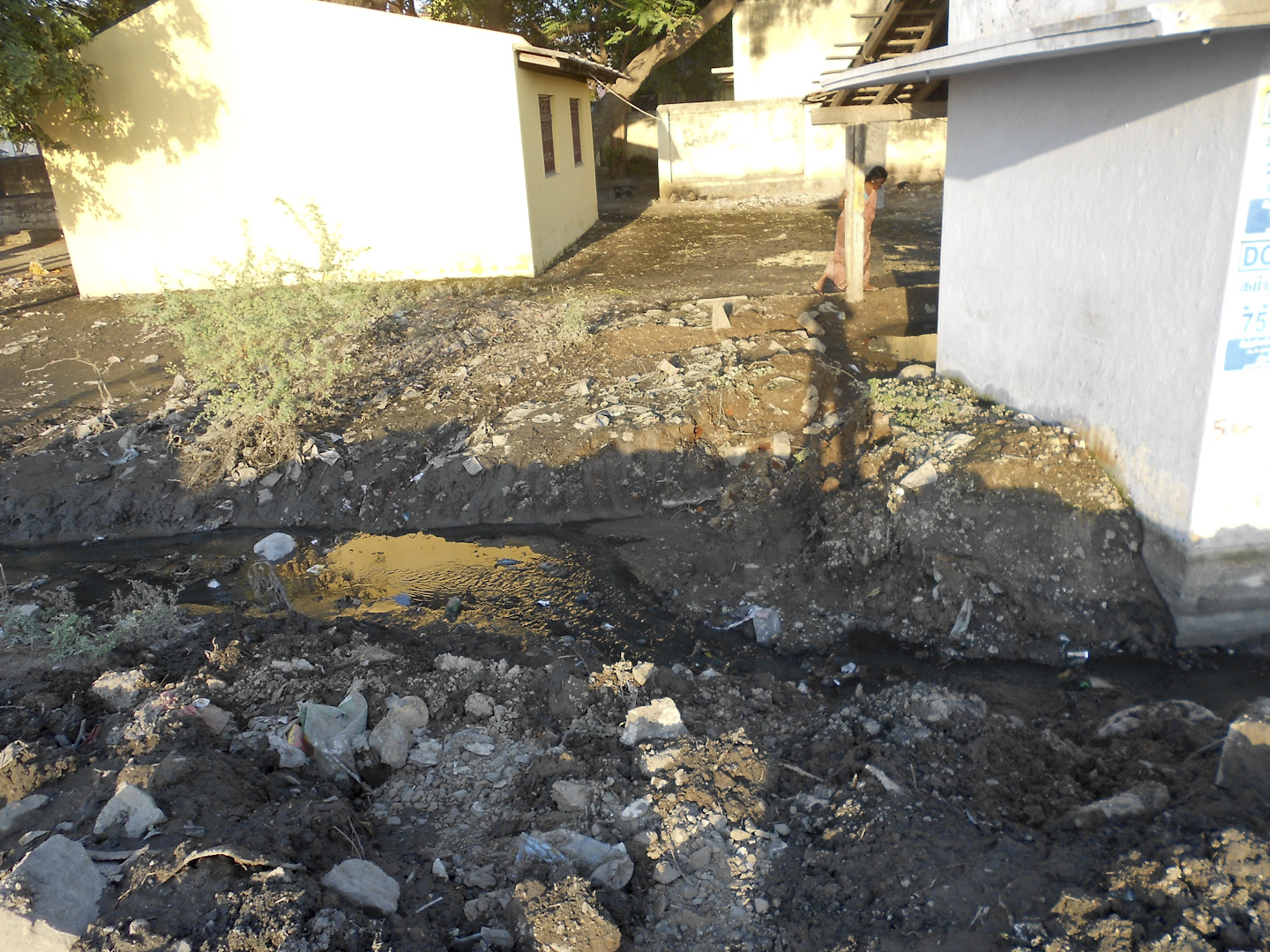
| photographer: pasupathi kathirvel. pasupathi, who takes karate from a village master, documented a few problems, including poor drainage around a temple and the disruption caused by street repairs. he jumped into a 3-foot hole in the road to take the last photograph. | ||
 |
 |
 |
| photographer: vijay govindan. vijay documented two problems: poor wastewater drainage, and child labor. he spoke passionately about the latter issue on the final day. | ||
 |
 |
 |
| photographer: vadivel raja. vadivel also photographed child labor. the final photo was taken at home; the girl does live at home and go to school, but this photo illustrates how girl children – unlike the boys – typically have to do household chores before going to school. | ||

 on the way to srikalahasti, we came across this building, the mandapam of the oneness movement. it is the largest pillarless hall in india (the movement claims), able to seat 8,000 people. the oneness devotees are followers of sri amma and sri bhagwan, a holy couple that preach … actually, i have no idea what they preach. love, compassion, a higher power … ma nishtana, one might say. oneness’ adherents say it is “a world changing phenomenon that is helping people of all faiths and paths move into higher states of consciousness,” and the temple is supposed to be “endowed with spiritual powers of ancient rishis who had meditated in the region. On entering the temple, the [movement’s] pamphlet declared that ‘the cowardly become courageous, the unwise become intelligent, barren hearts start flowering in love, and everyone will experience divinity'” (according to a journalist who investigated the place). of course, when we tried to go in, it was closed for renovations. we didn’t get any farther than the parking lot. (shades of walley world.)
 |
 |
across the way was this (for me) mesmerising tree plantation, one of a few that we saw as we drove through the south of the state. clearly, the a.p. forestry department is doing its work. in fact, we then drove into a national park and set out for the waterfalls, until we realized that it would be a 3 km hike in each direction; at mid-day, and without water or food, it wouldn’t be a good idea. still, it was nice to get a brief look at a decidedly not chennai-like vista – truly idyllic until the holiday-makers showed up.
 |
 |
 |

 |
 |
as we drove through andhra pradesh, we saw granite rock formations that looked as though they had been built by hand. quoting from one website:
andhra pradesh is endowed with spectacular rocky formations, which at many places, are simply awe-inspiring. they are indeed a natural wonder of stony ridges and hillocks shaped into picturesque balancing forms through millions of years of weathering and wearing. the deccan plateau, that is the vast expanse of peninsular india, south of the vindhyas and composed mostly of grey granite, is among the oldest and hardest rock formations in the world. geologists date these rocks to a period 2,500 million years ago. that is the time when the earth’s crust solidified. molten magma then pushed upwards from the interior and hardened under the crust into domes and sheets of granite. then horizontal and vertical cracks developed and slowly the top layers of the crust eroded and these very hard granites were exposed. they weathered over millions of years into their present forms – resulting in the bizarre, awe-inspiring, wonder-striking and almost man-made-kind-of formations.
there is a society to save rocks that is dedicated to preserving these formations.
(in response to a comment i received, i should note that this is actually a necessary type of organization. there are stonecutting companies that will level entire hills of this size for the raw building materials, if they get the chance. a fellow photographer showed me a field where a hill on which gandhi had spoken had been cut away; nearby was a hill with a huge slice cut out, like a birthday cake.)

my comrade-in-cameras james and i took another roadtrip, this time into andhra pradesh. on our way to the temple town of srikalahasti, we stopped at a brick kiln, one of many along the road.
 |
 |
 |
 |
| the bricks are stacked up and the fire is built underneath. they are not as sturdy as bricks made in the u.s.; if one has a crack in it, you can break it with your hands and it will crumble into pieces. | |||
 |
 |
 |
|
| there were two or three families living in thatch-roofed huts (with brick walls, of course) on the site. i didn’t ask the head of the operation how old the boys had to be before they started working; i didn’t see the girls handling the bricks, but i assume they have enough other chores to do. | |||

(with a few apologies to will cuppy:)
this sunday, i woke up at the painful hour of 4 am to travel with the photographic society of madras to fort gingee, 160 km south of chennai. it was an impregnable fortress complex consisting of three forts atop individual hills. the british referred to it as the “troy of the east.” and where is troy today?
the ride took nearly three hours, including a stop for breakfast, so it was already getting hot by the time we started our 90-minute climb. there are a number of buildings at the base of the fort, including granaries, a gymnasium, stables, and a marriage hall; then one passes through a thick wall, and begins climbing to the top. the buildings at the top are separated from the path by a 10-yard wide, 20-yard deep chasm. wikipedia notes “It was thus an impressive sight [sic] where the defender could seal himself indefinitely.”* naturally, the buildings are in ruins today, but it was still a good opportunity to take some photos, so let’s get to it, shall we?
 |
 |
 |
| rajagiri fort – “the king’s fort” – and the tower of the marriage hall; a walkway in the marriage hall; the granary ceiling. | ||
 |
 |
 |
| the fortress wall; the guard house after the drawbridge; a vishnu temple. (note the graffiti). | ||
 |
 |
 |
| more ruins, and views from the top. the hill in the distance is the krishnagiri fort. | ||
on the way down, we came across the monkeys, who had found a rubik’s cube at one point. ownership of the cube was still an issue.
 |
 |
 |
| the monkeys come to the rubik’s cube. note the piece on the ledge. | the monkeys consider this. | the older monkey investigates the piece. |
 |
 |
 |
| can i eat it? | the monkey determines that, indeed, he cannot eat it … | … and he goes for the rest of the cube, which immediately attracts the younger sibling’s interest. |
 |
 |
|
| can i play? | hell, no. |
*throughout history, “indefinitely” in these situations has meant “until the food ran out.”