
sharp focus is for wimps. or something like that.
Now Featuring Small-batch, Artisanal Photography!

sharp focus is for wimps. or something like that.

i recently took a one-week workshop at the london school of photography on photojournalism and street photography. some of the results:
 |
 |
 |
 |
 |
 |
the course was good for explaining the mindset of photojournalists and street photographers, but no course will get you past the fact that street shooting isn’t easy. after five days, i had only a dozen photos worth keeping.

 |
 |
shot with an olympus om-d e-m5.

since we have only 13 months left here (more or less), it struck me that i ought to be doing more street photography so i can remember what this place looks like. parry’s corner and the immediate area has been the most interesting for day-to-day life.
 |
 |
 |
|

during the second week, i went to salem, about 65 km south of dharmapuri. it is a significantly larger city and district than dharmapuri (3.5 million people vs. 1.5 million), and there was a different feel to this second group of kids. in part, it may have been that, because they come from a more urbanized area, they have different perspectives; or perhaps, because they had further to travel each day, they had less time to search for stories. it also may be that “only” six of them had been rescued from child labor, while the other four instead were members of the children’s parliament, the local children’s advocacy organ. (i don’t mean to be glib – six is still six too many – but i think the mix affected the way some of them approached the assignment.) at any rate, we ended up with more daily life scenes than issue scenes, but they still produced some great photos by the end of the week.
it’s also important for me to mention that one of the girls who was rescued from labor was subsequently mainstreamed back into public school, and she now is a star track athlete who is about to represent tamil nadu in a national competition in mumbai. i’m trying to not sound preachy, but … child labor is a crime against the future of the entire country.
now, the photos:
 |
 |
 |
 |
| kannan focused on village life and caught some wonderfully spontaneous shots. | lavanya did a mix of photos. the second photo is of a child laborer. | ||
 |
 |
 |
 |
| nathaji photographed garbage in the village and unsanitary conditions around the water tank – two common scenarios. | pasupathi executed some textbook close-up shots, and also documented issues of food safety in the markets. (note the flies.) | ||
 |
 |
 |
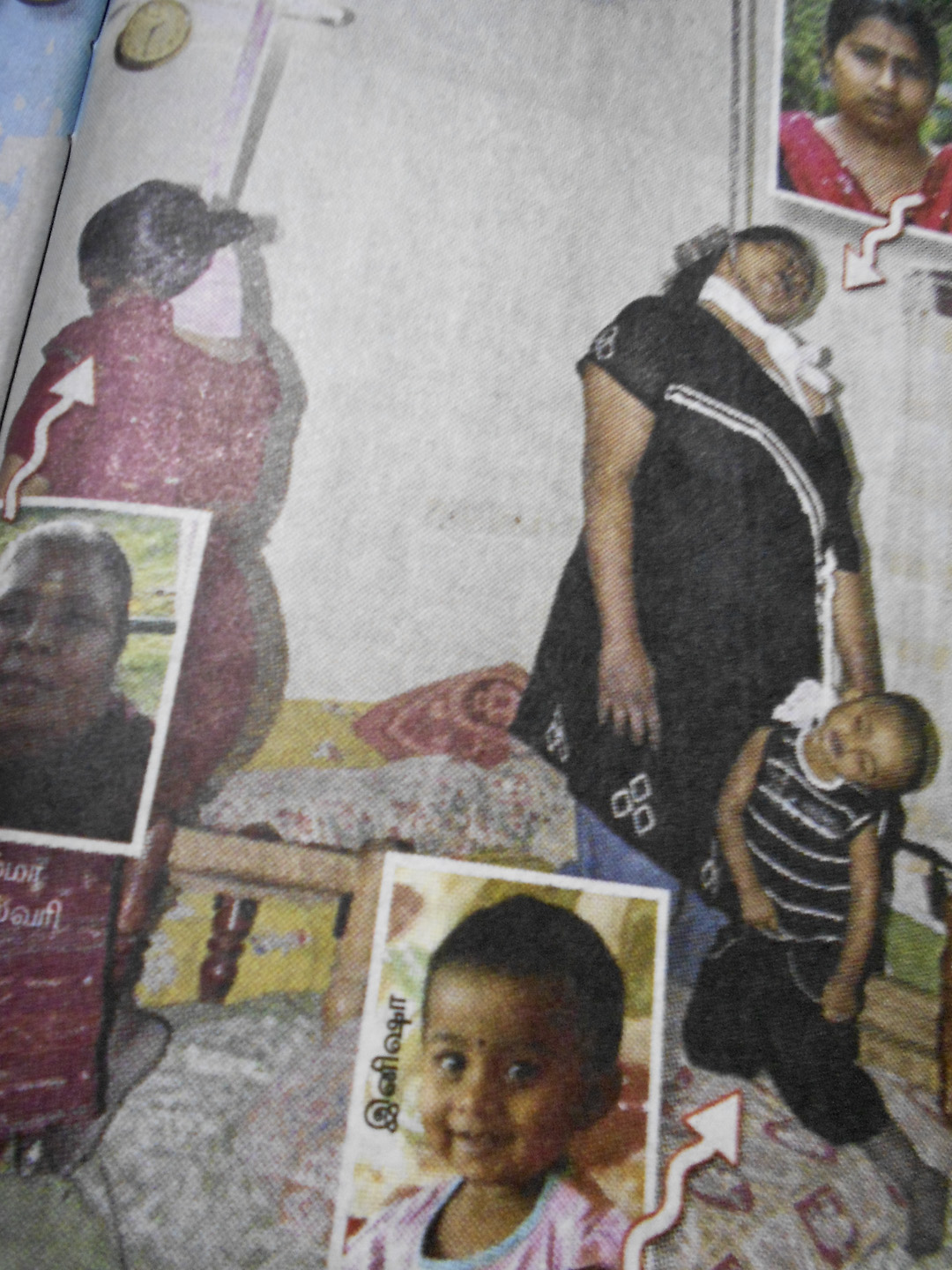 |
| rathidevi documented workers, including these scenes at a brick kiln. | ramya’s work fascinated me because she took a lot of photos of magazine pages and television screens, essentially taking a post-modern approach to photography. but how do you explain jean baudrillard to kids? | ||
 |
 |
 |
 |
| santhosh was drawn toward photographing flowers. the second photo subtly reminded me that trash on the street is a human problem; it doesn’t exist by itself. | shanti took one of the best street photography shots i’ve seen in a while. the second photo shows workers employed under the national rural employment guarantee act. | ||
 |
 |
 |
 |
| tamilselvam also focused on scenes of village life. | tamilselvi was concerned about the men and boys climbing coconut trees without any safety devices. | ||

during the weeks of may 14 and 21, i am teaching photography skills to village kids in tamil nadu. this project, supported by unicef, gives kids point-and-shoot cameras and asks them to document their lives and the issues that concern them. none of them have ever held a camera before, but they have experienced their issues – child labor, crumbling school buildings, etc. – first-hand.
the first batch of 10 kids were in dharmapuri, about 300 km southwest of chennai. aged about 12-18, all of them had been rescued from child labor situations. they now live with their parents and are enrolled in special schools that help them fill in the gaps in their education. the integrated child protection project, a project of unicef that works in coordination with the indian government’s national child labour project (indian spelling of labor this time), facilitated the workshop, and icpp staff visit the children weekly until they turn 18 to make sure that they stay with their studies and don’t return to work.

of the various socioeconomic and physical infrastructure problems associated with rural poverty, the two that the icpp staff told me are of the greatest concern are child labor and child marriage. many families worry daily about having enough food to eat, so if they need the children to help earn money, they send them to work in the cotton fields or brick kilns, or they find a job in a local business. sometimes, the parents pledge the child’s labor to pay off a loan. it is very hard to prove cases of child labor, since the parents may have a certificate forged to show the child is above the legal age of 15 years, or they tell investigators, “he’s just helping his father in the fields because he wants to, he’s not employed, he’s not being forced to work.”
the plight of child brides is more complicated, and as best as i understand it, the problem has both an economic and a social dimension. as a girl gets older, the amount of dowry that her parents are expected to offer increases. this gives the parents the incentive marry their daughters off as early as possible, even though child marriage is illegal. in addition, many of the parents need to migrate for work, so they think that they are providing for the girls’ security by marrying them off early. ironically, this only puts them at greater risk of becoming victims of domestic violence or suffering complications in childbirth. as for the prospective husbands, while some of them are equally young, the older ones see child brides as more likely to be docile and obedient, which is what they want, since the girl moves into the husband’s family’s home and essentially goes to work for him and his mother. one of the students in the group managed to stop two child marriages by reporting the arrangements to the authorities before they could be completed, and another was almost married off at fourteen herself.
this probably has been the most rewarding experience i’ve had in my five years of living overseas. the kids were eager to shoot but attentive to the instructions and in-field mentoring i gave them, and the improvement they showed over the four days (in composition or at least in confidence) was amazing; i’m not embarrassed to say that i wish i had taken some of the photos these kids took. they didn’t address all the issues we were hoping to capture – for example, none of them took photographs of child brides – but they did capture both the positive things in children’s lives as well as the more serious ones; and when they explained the issues to a district official who came to the final day presentation, their passion was intense. i have a hell of a lot of respect for these youngsters; and while i’m not going to go all sally struthers (kids – ask your parents!) about them, if i now hear anyone – including myself – whine about how tough his life is, i’m going to kick him in the ass.
with a little post-production editing, here are the befores and afters:
| a first day photo | later photos: life scenes and issues/stories | |
 |
 |
 |
| photographer: lakshmi arumugam. the final photo is from a story about a children’s school. the three girls who worked on this story were struck by the teaching aids all over the walls, and lakshmi’s photos showed both how many there are and how the teacher uses them. | ||
 |
 |
 |
| photographer: kokila kaveri. the improvement in composition from the first photo to the second is obvious. the last photo is a close-up of a child using the materials on the schoolroom walls. | ||
 |
 |
 |
| photographer: jayamani jayavel. this photographer also worked on the schoolroom story, but then she did a series on unsafe drinking water and drainage problems in her neighborhood. | ||
 |
 |
 |
| photographer: munirathinam pattabi. munirathinam focused more on life scenes, including scenes of women at work. again, the improvement in composition is clear. | ||
 |
 |
 |
| photographer: shanmugam raja. shanmugam shot at a local religious fair, and then got up early to document food vendors preparing for the morning trade. | ||
 |
 |
 |
| photographer: selvi murugan. selvi made some interesting, quirky photographs from the start. the latter two photographs document the condition of an abandoned school building that the village has failed to demolish even though there is a new school on the same grounds. | ||
 |
 |
 |
| photographer: najma nazeer. najma also showed some talent from the outset. the second photo shows a woman working in a silk-spinning workshop. the third photo shows a girl squatting in the toilet facility of her house, which is located next to the railroad tracks. | ||
 |
 |
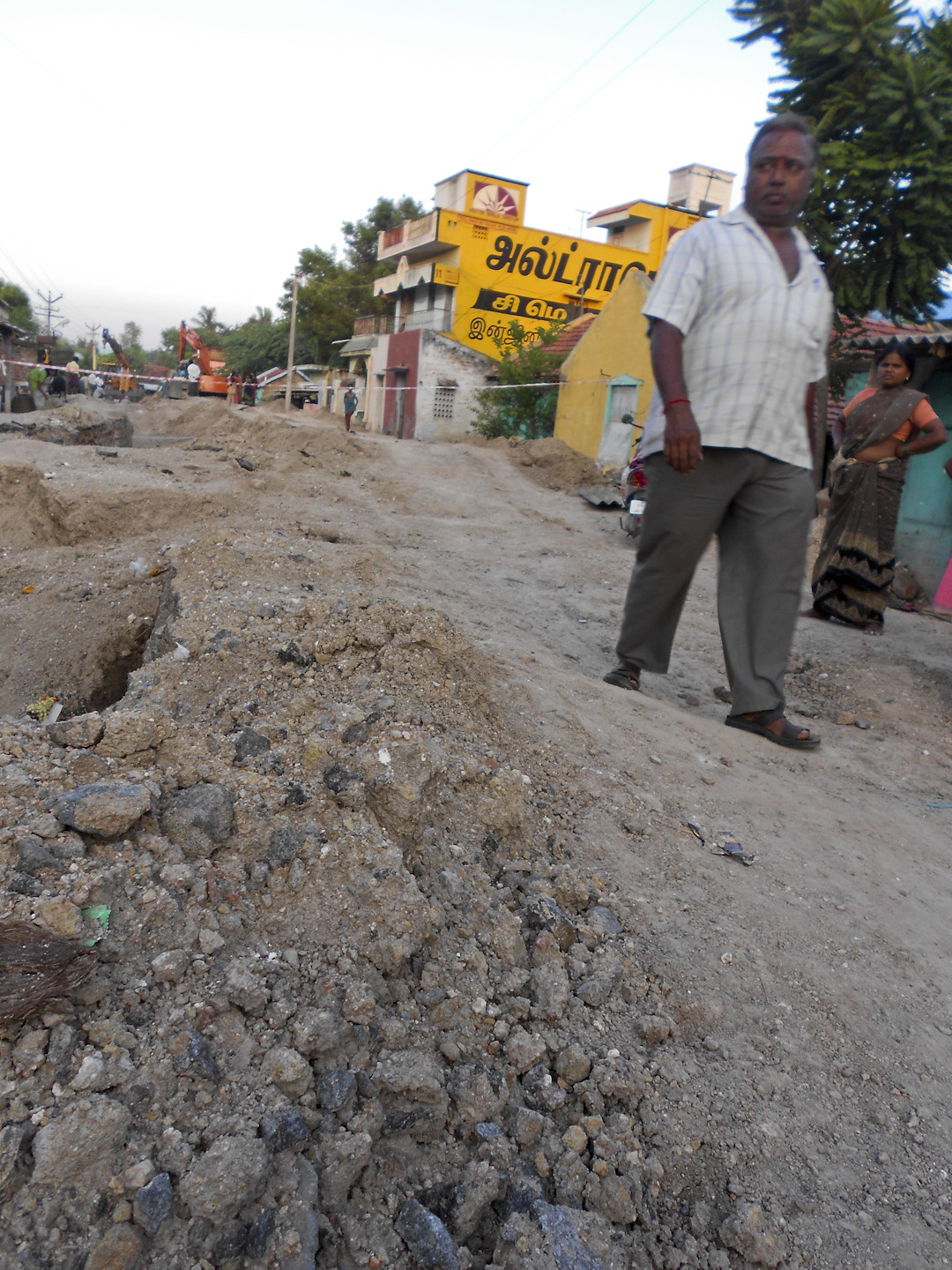 |
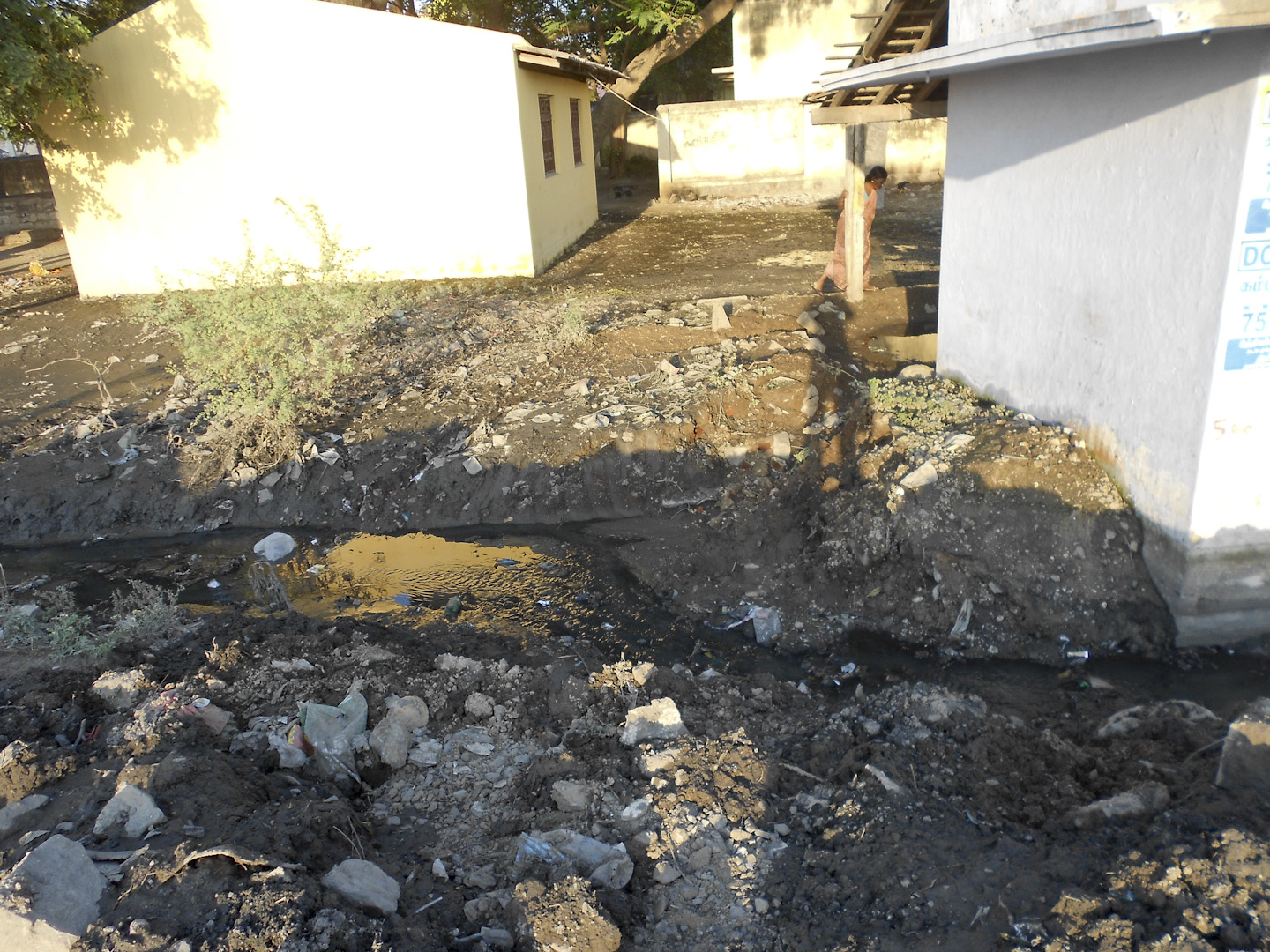
| photographer: pasupathi kathirvel. pasupathi, who takes karate from a village master, documented a few problems, including poor drainage around a temple and the disruption caused by street repairs. he jumped into a 3-foot hole in the road to take the last photograph. | ||
 |
 |
 |
| photographer: vijay govindan. vijay documented two problems: poor wastewater drainage, and child labor. he spoke passionately about the latter issue on the final day. | ||
 |
 |
 |
| photographer: vadivel raja. vadivel also photographed child labor. the final photo was taken at home; the girl does live at home and go to school, but this photo illustrates how girl children – unlike the boys – typically have to do household chores before going to school. | ||

while chennai has a strong tradition of carnatic music and kathakali dance, the city is not known for its support of the visual arts. a local businessman/art collector began an art festival last year, to bring the visual arts to a wider public. i attended the photography group show and made contact with the curator so that i could be volunteer to support this year’s show (and possibly get a few works in myself). my gambit worked, although the theme of the group show was such that i wasn’t happy with the pieces they selected for it; however, i was more successful with the “chennai 24/7” public art project that opened the same day in one of the larger suburban line train stations.
 |
 |
 |
chennai’s metropolitan rapid transit system (mrts) had its roots in the suburban lines of the 1930s, but the system in its current incarnation was completed only in 1997. many of the stations are behemoths of concrete stretching a city block; three stories tall, they were designed (it is said) to house shops and offices, but those plans never came to fruition, and they were left empty instead. over the years, the stations have accumulated layers of grime and dust; the stairwells reek of urine, the bases of the walls are caked with betel juice spit, and one can find the occasional condom or (as is rumored to have happened) a dead body in one of the dark corridors that dead-ends into a locked door or stairwell to nowhere. even with all that, however, they have fantastic interior spaces for showing public art.
with the help of the goethe institute, we got mrts to agree to turn six stations into public art galleries for the week of art chennai 2012. (over the month, this number was reduced to one.) photographers from across the city were invited to submit photos of chennai taken during a specific week, and then we went through the over 1,100 submissions and made a selection of 130 which we printed on flex vinyl so they could withstand public handling. the mrts staff swept the floors and repainted the walls for perhaps the first time in a decade, and we contracted with local crews to paste the photos on the walls. i won’t go into all the snafu’s here; i’ll only say that the job, which the contractor promised would be done in two days, took five and only was finished the morning of the opening.
 |
 |
 |
 |
| scenes from the installation, and the results. at each spot where photos were to be pasted, the guys would assemble scaffolding from bamboo poles, climb up, and attach the flex, after which they’d climb down, untie the poles, and move them to the next spot. to be fair, the guys who did show up worked late into the night to get the job done. | |||
abby took photos of the opening and of my six works.
 |
 |
 |
 |
 |
 |
 |
 |

(with a few apologies to will cuppy:)
this sunday, i woke up at the painful hour of 4 am to travel with the photographic society of madras to fort gingee, 160 km south of chennai. it was an impregnable fortress complex consisting of three forts atop individual hills. the british referred to it as the “troy of the east.” and where is troy today?
the ride took nearly three hours, including a stop for breakfast, so it was already getting hot by the time we started our 90-minute climb. there are a number of buildings at the base of the fort, including granaries, a gymnasium, stables, and a marriage hall; then one passes through a thick wall, and begins climbing to the top. the buildings at the top are separated from the path by a 10-yard wide, 20-yard deep chasm. wikipedia notes “It was thus an impressive sight [sic] where the defender could seal himself indefinitely.”* naturally, the buildings are in ruins today, but it was still a good opportunity to take some photos, so let’s get to it, shall we?
 |
 |
 |
| rajagiri fort – “the king’s fort” – and the tower of the marriage hall; a walkway in the marriage hall; the granary ceiling. | ||
 |
 |
 |
| the fortress wall; the guard house after the drawbridge; a vishnu temple. (note the graffiti). | ||
 |
 |
 |
| more ruins, and views from the top. the hill in the distance is the krishnagiri fort. | ||
on the way down, we came across the monkeys, who had found a rubik’s cube at one point. ownership of the cube was still an issue.
 |
 |
 |
| the monkeys come to the rubik’s cube. note the piece on the ledge. | the monkeys consider this. | the older monkey investigates the piece. |
 |
 |
 |
| can i eat it? | the monkey determines that, indeed, he cannot eat it … | … and he goes for the rest of the cube, which immediately attracts the younger sibling’s interest. |
 |
 |
|
| can i play? | hell, no. |
*throughout history, “indefinitely” in these situations has meant “until the food ran out.”

taken the 11th through the 14th.
|
 |
 |
| damn light leak. |

